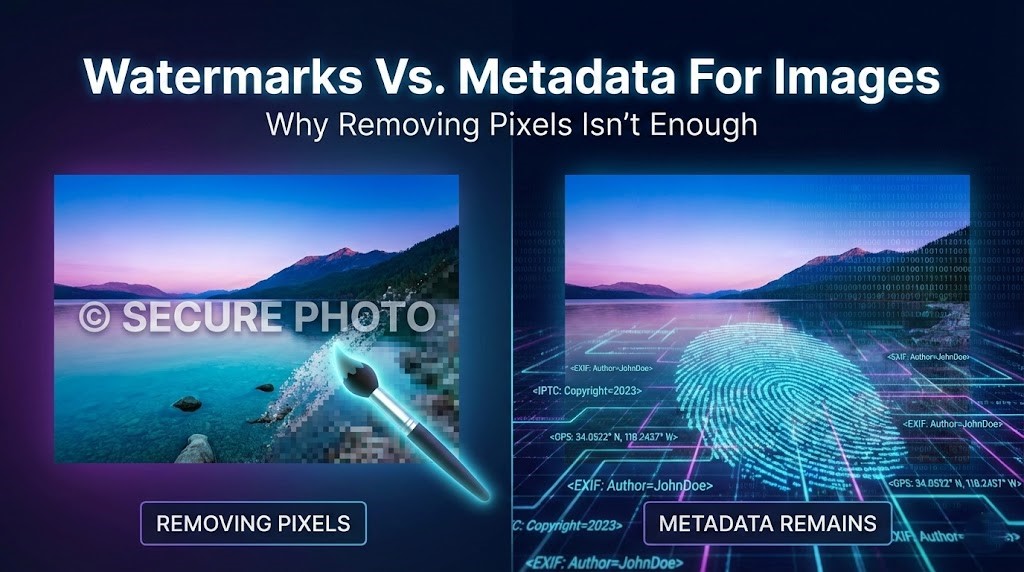
When people talk about image ownership, watermarks usually come to mind first. A visible logo or text overlay feels like the main barrier between an image and unauthorized use. As a result, many assume that once a watermark is removed, the image is “clean” and ready to use.
In reality, images contain more than just visible pixels. Beyond what you can see, image files often include hidden data: metadata that can identify the creator, copyright information, and usage rights.
In this article, we’ll explore the differences between watermarks and metadata, explain why removing pixels is insufficient, and demonstrate how understanding both is essential for using images responsibly.
What are image watermarks and metadata?
Image watermarks are visible markings placed directly on an image to indicate ownership or authorship. They are designed to be easily noticed by viewers and serve as a visual reminder that the image is protected.
Watermarks are commonly used by photographers, designers, and stock image platforms to:
- Signal who owns the image
- Discourage unauthorized copying or reuse
- Promote a brand or creator
There are several common types of image watermarks:
- Text watermarks, such as a photographer’s name or copyright notice
- Logo watermarks, often used by brands or stock websites
- Pattern or overlay watermarks, which repeat across the image to make removal more difficult
The blog What is watermark clarifies more details around watermark for you. While watermarks can be effective as a deterrent, they have clear limitations. They do not enforce copyright on their own, and they can sometimes be removed or obscured through editing tools. Most importantly, a watermark’s presence, or absence, does not determine who legally owns an image.

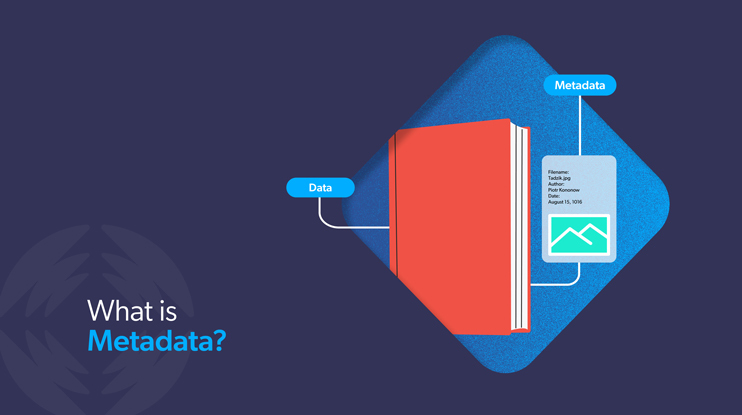
Image metadata is hidden information embedded within an image file that provides details about the image beyond what you can see on the screen. Unlike watermarks, metadata is not visible when viewing the image normally, but it can be accessed by software, platforms, and image management tools.
There are several common types of image metadata:
- EXIF data, which includes technical details such as camera model, settings, date, and sometimes location
- IPTC data, often used by professionals to store author names, copyright notices, and usage instructions
- XMP data, which supports more detailed and customizable licensing and ownership information
Metadata can contain important information such as:
- The name of the creator or photographer
- Copyright and licensing details
- Creation dates and edit history
- Device or software used to produce the image
Because metadata is embedded in the file itself, it can travel with the image as it is shared or uploaded. Many platforms, agencies, and stock websites rely on metadata to help identify ownership, manage rights, and resolve copyright disputes.
Watermarks vs. metadata: Key differences
Although watermarks and metadata both help protect images, they serve very different purposes and operate in completely different ways. Understanding these differences is essential for anyone working with images online.
Watermarks are visible. They are designed for humans to see and act as a deterrent against unauthorized use. Metadata, on the other hand, is hidden and primarily used by software systems, platforms, and professionals to identify and manage image rights.
- Visibility: Watermarks are clearly visible on the image, while metadata is embedded and invisible during normal viewing.
- Function: Watermarks discourage misuse; metadata documents ownership and usage rights
- Removal: Watermarks can sometimes be edited out, while metadata requires deliberate actions and specialized tools to remove or modify
- Readability: Watermarks are human-readable; metadata is machine-readable
- Reliability: Watermarks may be cropped or altered, but metadata can persist across platforms and workflows.
→ Watermarks act as a warning, while metadata acts as proof. Removing one does not affect the other, and neither alone determines whether an image can be used legally.

Why sometimes removing watermarks isn’t enough
Removing a visible watermark only affects the surface appearance of an image. It does not change who owns the image, how it is licensed, or whether it can be used legally.
Even after a watermark is removed, copyright still applies to the image, and metadata may still be embedded, identifying the creator or copyright holder. Platforms, agencies, and advertisers may still detect ownership through metadata or content-matching systems.
In many real-world scenarios, such as advertising campaigns, websites, or social media promotions, images are reviewed beyond visual inspection. Stock platforms, ad networks, and copyright owners often rely on metadata, upload histories, or original source files to verify rights.
This means that removing pixels does not remove: legal responsibility, copyright claims, and potential DMCA takedowns
In other words, an image can look “clean” while still carrying clear signals of ownership and copyright behind the scenes. Relying solely on watermark removal creates a false sense of safety and can expose users to legal and compliance risks.
From a legal standpoint, both watermarks and metadata are secondary to one fundamental rule: copyright exists regardless of visibility. An image does not need a watermark or embedded metadata to be protected by law.
Copyright enforcement, including DMCA takedown requests, does not require a visible watermark. Copyright owners can submit claims based on original files, publication history, or metadata evidence. In many cases, metadata strengthens a claim by clearly identifying the creator and ownership details.
For businesses and advertisers, compliance risks are especially high:
- Using an image without proper rights can lead to takedowns, even if the watermark has been removed.
- Metadata can be used to support infringement claims during disputes.
- Advertising platforms may reject or remove content if ownership cannot be verified.
In regulated industries or professional environments, image audits may include metadata checks as part of content review processes. Failing these checks can result in delayed campaigns, legal notices, or forced content removal.
When watermark removal tools are appropriate
Watermark removal tools can be useful and completely legitimate when used in the right circumstances. The key factor is not the tool itself, but whether the user has the legal right to modify and use the image.
Appropriate and ethical use cases include:
- Images you own: If you created the image or your business owns the rights, removing a watermark for final use or design purposes is generally acceptable.
- Licensed stock images: After purchasing a valid license, some users remove preview watermarks or overlays to access the clean, licensed version of the image.
- Internal or personal projects: Cleaning up images for internal presentations, archives, or personal collections where rights are already secured.
It’s important to remember that removing a watermark does not remove metadata, licensing terms, or copyright obligations. Tools like Dewatermark should be used responsibly, only on images where you have clear ownership or permission.
Images are more than just visible pixels. While watermarks act as a visual warning, metadata quietly documents ownership and rights behind the scenes. Removing a watermark does not remove copyright, metadata, or legal responsibility. By focusing on proper licensing and ethical use, rather than just removing visible marks, you can avoid legal risks and work with visual content confidently and compliantly.