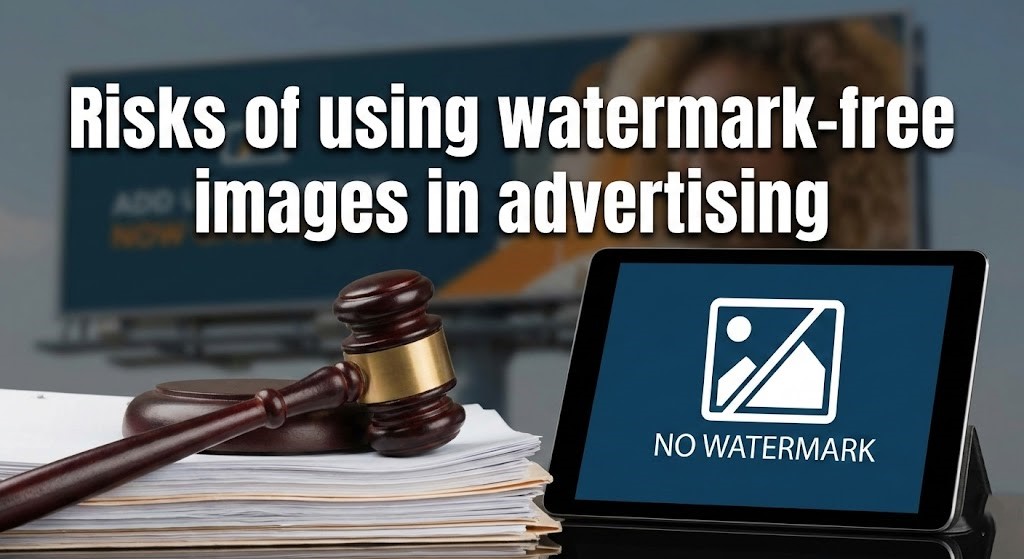
Images play a powerful role in advertising. They capture attention, communicate brand identity, and influence purchasing decisions in just seconds. A common misconception is that watermark-free images are automatically safe for commercial use. In reality, removing or not seeing a watermark does not eliminate copyright, licensing requirements, or legal responsibilities.
Discover the legal risks of using watermark-free images in advertising, explain why these risks exist, and outline how businesses can protect themselves while using visual content responsibly.
What does “watermark-free” actually mean?
The term “watermark-free” simply means that an image does not display a visible logo, text, or overlay indicating ownership. It does not automatically mean that the image is free to use, royalty-free, or legally licensed for advertising purposes.
Many copyrighted images appear online without watermarks. Some creators choose not to add watermarks, while others remove them after selling licenses or publishing final versions. In these cases, the absence of a watermark does not change the legal ownership of the image.
It’s important to understand the difference between common image categories:
- Licensed images: Images purchased or obtained under a valid license that specifies how they can be used, including commercial advertising.
- Copyrighted images without watermarks: Images still fully protected by copyright, even though no watermark is visible.
- Public domain images: Images whose copyrights have expired or been waived, allowing free use, though verification is essential.
For advertisers, assuming that watermark-free equals “safe to use” is a risky mistake. Legal permission depends on licensing and rights, not on whether an image displays a watermark.
Legal risks of using watermark-free images in advertising
In advertising, copyright rules are enforced more strictly because ads are considered commercial use. Unlike personal or editorial use, commercial use directly promotes a product, service, or brand, which significantly increases legal exposure if the image is used without proper authorization.
Copyright infringement
The most common risk is copyright infringement. If an image is used without the creator’s permission or a valid license, the copyright owner has the right to demand removal, seek compensation, or pursue legal action.
Consequences may include:
- DMCA takedown notices
- Financial claims or settlement demands
- Forced removal of marketing materials
Even if the image was found online without a watermark, it can still be fully protected by copyright law.
DMCA takedowns and advertising platform penalties
Copyright complaints can lead to immediate ad removal on platforms such as Google Ads, Facebook Ads, and other digital networks. In some cases:
- Ads are paused mid-campaign
- Advertising accounts receive infringement warnings
- Repeat violations can lead to account suspension
This can disrupt campaigns and result in wasted advertising spend.
Trademark and brand misuse
Some images include logos, brand names, or protected designs. Using such images in advertising may create the impression of endorsement or affiliation, which can trigger trademark disputes.
Trademark violations can lead to:
- Legal claims from brand owners
- Mandatory ad removal
- Brand credibility damage
Model and property rights violations
Advertising images often require model releases for identifiable individuals and property releases for private locations, artwork, or interiors. Using watermark-free images without these releases can result in:
- Privacy or publicity rights claims
- Legal disputes with individuals featured in the image
These risks apply even if the image itself appears freely available online.
The legal risks of using watermark-free images without proper rights can quickly turn into real business consequences. For advertisers, these issues often affect more than just a single image; they can disrupt entire campaigns.
Campaign shutdowns, financial losses & brand reputation damage
One common outcome is campaign shutdowns. When a copyright complaint is filed, advertising platforms may immediately pause or remove ads while the issue is reviewed. This can happen in the middle of a paid campaign, resulting in lost exposure and wasted ad spend.
Financial losses are another major concern. In addition to losing money on paused ads, advertisers may face:
- Compensation demands from copyright owners
- Legal fees or settlement costs
- Additional expenses to redesign or relaunch campaigns
Beyond financial impact, there is also the risk of brand reputation damage. Using images without permission can make a brand appear unprofessional or unethical, especially if disputes become public or visible to customers.
In more serious cases, repeated copyright violations can lead to account restrictions or permanent bans from advertising platforms. Recovering a suspended ad account can be difficult and time-consuming, potentially affecting long-term marketing performance.
When using watermark-free images is legally safe
Using watermark-free images in advertising is not always risky; it can be completely legal when the proper rights are in place. The key factor is not the absence of a watermark, but whether you have clear permission to use the image commercially.
- Images you created yourself: If your team produced the images in-house, your business typically owns the rights, assuming no third-party restrictions apply.
- Properly licensed stock images: Images purchased from reputable stock platforms often come with commercial licenses that allow advertising use. Always review the license terms to ensure your intended use is covered.
- Public domain images: Some images are in the public domain, meaning copyright has expired or been waived. Even then, it’s important to verify the source and confirm that no additional rights (such as trademarks or publicity rights) apply.
- Images with explicit commercial-use permission: Some creators offer images under licenses that clearly allow commercial and advertising use. Written permission or license documentation should always be kept on record.
When advertisers can clearly demonstrate image ownership or licensing, watermark-free images can be used confidently and legally in marketing campaigns.
Using watermark-free images in advertising can seem convenient, but it comes with important legal responsibilities. For advertisers and marketers, the safest approach is to verify image rights, keep proper documentation, and use visual content ethically. By understanding the legal risks and using AI watermark remover tools responsibly, businesses can protect their campaigns, their budgets, and their brand reputation while still creating impactful advertising.